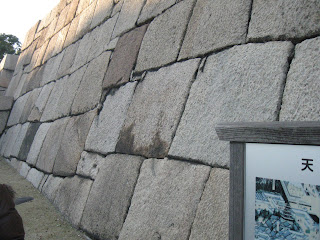
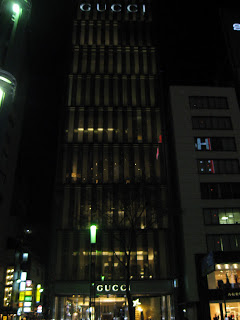
Showing posts with label Tokyo. Show all posts

Tuesday, January 3, 2012

Japan: Day 9 - Tokyo: Odaiba

Odaiba is an artificial island in Tokyo. I really enjoyed this visit, there are lots of interesting things to see, such as the Toyota Mega Web, a shopping mall with lots of pet shops selling any kind of item you can imagine (or not), museums, etc. What amazes me is the size of this place; I would never have imagined I was on an artificial island unless I was told.

Odaiba - Tokyo
Odaiba - Tokyo

It seems to be better to visit this place during the week, as weekends are packed I read. Even during the week, there were lots of people around.

Odaiba - Tokyo
Odaiba - Tokyo


The JR train can be taken to Odaiba, but be careful. From Ozaki to Tokyo Teleport station at Odaiba , the way becomes a private (Rankai Line) and an additional fare needs to be paid at the destination (Y320 for the ride between Ozaki-Odaiba).

Toyota Mega Web is a huge showroom where all car models are shown. The main attraction was a futuristic uni-personal vehicle that could be driven (only Japanese speakers allowed), and all the new Hybrid car and SUV models. Also, a few Lexus cars are in display. This is interesting even for somebody who isn't a fan of cars. At this location, Toyota has a private track for test driving most car model they have (fee of Y300 to Y500, need to register/pay in two machines, need Japanese or international driver license).

National Museum of Emerging Science, Miraikan, is located close to the Fuji Television Studio (further away than the Fuji TV building). Follow the monorail line, but use the internal sidewalk, the way on the other side of the street (closer to the coast) is much longer because there's no place cross the road until many blocks away.
The entrance fee to the museum is Y600 (u$7.79) and last admittance time is at 4:30pm. They close at 5pm sharp, and very politely they ask visitors to leave at this time. The museum is very interesting, even for the non techie (as I was visiting it with one :-). Two floors are part of the permanent exhibition. It will cost extra to get in special exhibits (Y1000).


Tips & Tricks
  • I haven't tried this, but it could help saving some Yen - If you have purchased the JR pass, when going out of Odaiba, just purchase the minimum fare ticket in order to get inside the train. In the mainland, when you get out on a JR station, show the JR Pass and avoid fare adjustment.

Monday, January 2, 2012

Japan: Day 8 - Emperor speech at the Imperial Palace

This is going to be our last night in Japan, tomorrow at midnight, we head back to California. We'll change hotel once more. Tonight we'll be on the major leages and will sleep at the Hilton Tokyo, just 4 bloks away from the Rose Garden Hotel. 


Hilton - Tokyo
Hilton - Tokyo

Hilton - Tokyo
Hilton - Tokyo

Hilton - Tokyo
Hilton - Tokyo

Hilton - Tokyo
Hilton - Tokyo

Hilton - Tokyo
Hilton - Tokyo
Hilton - Tokyo
Hilton - Tokyo


The Hilton lies behind the Univesity Hospital, and a few blocks away from the Police station. We got a room on the 20th floor, it was awesome. It was as big as the US (finally... some space!), it had a large window with great and relaxing view, high definition TV, fridge, and all the stuff that every hotel we stayed seem to include: toothbrush, tooth paste, coffee, tea, iron, etc. Wired and wireless Internet is available but it isn't free (Y1680 or u$21.8 for 24 hours). Most of 4+ star hotels charge for Internet access, as for evey single item :-), but this is price to pay for a high end hotel. Still, a drawback when compared to the smaller hotels that give Internet for free. The Hilton is 3-4 blocks further away than the Rose Garden from Shinjuku station. This is still an easy walk, but a free shuttle service to/from the station is available. Also, the Hilton can arrange bus reservations to Haneda and Narita airports. There's a fee to pay. I wouldn't expect to offer this for free as this is a longer ride, but we'll use the JR train to go to Haneda.
I love the bus/rail/subway system in Japan. The first day, I was extremly confused, but it is awesome now that I know how to use it. It allows reaching every point in Tokyo (also I experienced the same for Kyoto), and the schedule is on time by the minute. Also, inside the trains, Japanese people are very respectfull and quiet. For example, they turn off their cell phone ringers. In the whole stay, I heard only 3 rings. They were always from foreigners. Another highlight is how clean Japanese are. After coming back later at night to Shinjuku, Roponggi, Shibuya stations, it's hard to spot a single piece of paper on the floor. Probably hundred of thausands people walk through it.
We were lucky to find a room available at the Hilton when we checked early morning in. Usually Japanese hotels don't guarantee room availability until 2 or 3 pm. We just left our bags and rushed to the Imperial Palace. January 2nd. is one of the two days in the year when the emperor of Japan gives a speech on the palace's grounds. The other day is sometime in December, on his birthday.
The number of people walking to the palace was massive, cops stand at every block. The closer to te palace, the more security that could be seen. On the way, Japanese flags were given to everybody. Later, the would be woven when the emperor went out. We had to go through two security check points. The open every bag, and pat down everybody. Something to notice is that here they don't care about the sex, either a police wooman or man can pat you down. I got a police wooman; my wife didn't like this so much, but I was cool with it :-D


After a very nice walk through the gardens, we arrived to the grounds and waited there for about an hour. All the time, more and more people were arriving. I would said in the tens of thousands. The wait wasn't bad at all. Once again, Japanese are very respectful so no laud yelling, no drunks, and although space was tight, people still tried to leave some room between each other. It was a cold day and it was warm inside the multitude. The emperor's speech was brief, just 5 minutes, and I have no idea of what he said. I think he gives some good well wishes to everybody. Afterwards, everybody waves Japanese flags and leaves the area in a very organized way. Leaving the place as clean as it was before. I enjoyed the experience.

Next stop, Akihabara. I wanted to spend some more time in the area, visiting electronic and manga (anime) stores. Some of the stores have 7 or more floors, each one dedicated to different product types, such as computers, home electronics, souvenirs, bags, clothes, and more, much more. This time, we went to the top of the building, and from there, visited floors down. This seems to be faster. We went to LAOX Main Store, Takarada Musen Duty-Free, and some others close to them. I didn't want to spend to much time here and picked the ones that seemed bigger, but there are lots more. In Akihabara station, we got a map of the area, showing the main stores. The DVD stores are 3 or 4 floor tall and mostly sell Japanese adult movies, of course only guys were shopping inside. The famous manga (comics) stores are also multifloor, with lots of magazines and books of every size. If you pay quick attention, most of those comics show innocent faced girls in X rated positions or little-no clothings :-). 

Akibahara Electronic Town - Tokyo
Laptop with Japanesse keyboard - Akibahara Electronic Town - Tokyo


Afterwards, we spent some hours on Shibuya and Harajuku. Those places were packed today. On our previous visit, they were pretty empty due to the holiday. Shibuya 109 was having a 7 day sale and it was packed of trendy dressed girls trying to grab some offers. It was hard to walk inside the store.
In Harajuku, Takarita street was also full of shoppers. On a parallel main road, there was a small market on the sidewalk, with all kinds of tasty and cheap foods (Y300 to Y500). Something very nice of Tokyo is that all those different districts (neighborhoods) , have their own downtown with tons of shops, restaurants, and people until late. This is very nice. Somebody would need to spend months in order to get to know all these area well.
At dinner time, we took the subway (line E) to Roppongi. This is the trendy bar and restaurant area from Tokyo. International chains can be found here such as Hard Rock, TGI Friday's, and many others. BTW, by Roppongi there's a large mall called Tokyo Mid Town, accessible from the subway station.The Ritz Carlton Hotel is there. It's supposed to be one of the bests in Tokyo but I wasn't impressed by the lobby. Finding the way out of the mall was a little confusing, the trick is to look for the exit to Roppongi Crossing.
We ended up at a Turkish restaurant with 3 floors. It's name was Daze or something similar. The food was excellent, the prices very good (Gyro sandwitch for only Y500 or u$6.5), international credit card is accepted, and the street view from the 3rd floor was excellent. Hard to beat.
Unfortunately it was Monday, and Roponggi was pretty empty. After a dinner, we took the subway back to Shinjuku, had a walk on the area, and that was it for the day.
Tips & Tricks
  • On the basement of Takarada Musen Dute-Free, we found some nice Japanese souvenirs, 5-10% cheaper than at any other place we've been. Most of the stuff is exactly the same.
  • Most shops in Akihabara do have staff that speak more English than in other places we've been. Also, they accept international credit card.
  • In Takarada, the tax exemption (dute free) only applies to purchases above Y10000 (u$129.8) and after presenting a passport. Sales tax in Japan is only 5%.

Sunday, January 1, 2012

Japan: Day 7 - Tokyo: Senso-Ji Temple and Shibuya

On January first, people go in masses to temples. Today we were able to experience it at Senso Ji. We arrived close to 2:30pm and there were thousands of people in line. The flow of people was constant and we decided to get in. It probably took 45 minutes to get inside. On the whole way, there are shops with different items and food on display, that made us forget that we were waiting on line. Visiting this place should be part of a trip to Tokyo.
Senso-ji - Asakusa Kannon Temple - Tokyo

Senso-ji - Asakusa Kannon Temple - Tokyo


Inside the temple, people gives away tons of coins (it's funny to see so many to be tossed), and afterwards pray for a few seconds. The area surrounding the temple is also nice to visit, with lots of shops and restaurants too.


For dinner we went to Uoeno area, took the subway to get there, and ended up at Jonathan's Coffee & Restaurant across the Matsuzakaya store, after asking for a place with some international style food. The menu is pretty varied, including fish, pork, chicken, beef, pasta. They have some healthy foods. In the menu, the calories from each dish is shown. Costs range between 750 and 1200 depending the plate. For example, chicken with vegetables was Y850 (u$11). Not fried. Very good taste. For an additional Y230, free fountain drinks, tea, coffee are included. Not bad. I've been told that this is a chain. This restaurant is a good option.
BTW, the reason of picking Uoeno is because it was the closest station with JR train stop. I'm trying to use JR lines as much as possible, as those rides are included in the JR Pass.
Later in the evening, we went to the Shibuya district wishing to see the latest Japanese fashion and funny dressed kids on the street.


But it was either too late or on January first people don't come to this place too much. We couldn't see as much as expected, and most stores were already closed. We'll try to go back in the following two days. This area has lots of stores and shops too, and it's another points of interest to us.

Shibuya - Tokyo
Shibuya - Tokyo

Saturday, December 31, 2011

Japan: Day 6 - Kyoto: Nembutsu-ji and Kinkaku-ji , Tokyo: Shinjuku


We started heading towards the Arashiyama district, north west of Kyoto, with the goal of visiting Adashino Nembutsu-ji Temple.
Lashing Nembutsu-ji is a small temple, Y600 entry fee (u$7.8). The highlight is the cemetery with 8000 Buddha statues. They were originally scattered in the area, and only 100 years ago, they were found and put together inside this temple. It took about 30 minutes to visit this temple. I would recommend it to somebody with extra time. The temple lies in the outskirts of Tokyo and the ride is long. The cemetery is very interesting, but not as great as others IMO.


We rode the JR train from Kyoto Station to Arashimaya, and walked from there (taking the bus would be much easier, continue reading...). The street signs and roads were confusing. There aren't many signs in English. Following a recommendation from a helpful cab driver proved to be a big mistake; he sent us on the opposite direction. Good that we weren't going to take this cab ! ... perhaps that's the reason we got those directions :-) After a long walk and after asking a few times, we ended up at Daikaku-ji temple, about 1.5 miles away from our destination. Since we lost at least an hour (on the positive we burned some calories) , we just took a quick look at Daikaku-ji grounds and took cab to Adashino Nembutsu-ji. The taxi ride took about 15 minutes and the fare was Y650 (u$8.5). Before getting in, I asked the driver how much it was going to cost.
A better way of getting to the temple is taking the bus that stops just on front of Daikaku-ji, saving a lot of time and Yens. From this point, walk to Nembutsu-ji for about 20 minutes (slightly uphill) or take a cab. But be carefull in case of walking. The roads are small and windy, and it's easy to take the wrong one. In the shop from the bus stop you can ask for directions; they have a map of the area in Japanese (better than nothing). Another consideration is that Nembutsu-ji is outside the 'white' area covered by the 1 day bus pass. Here the bus fare is variable. We took the bus to go to the next spot, Kinkaku-ji. When getting inside the bus, I took a ticket from a machine, with just a number which represents the stop where we boarded. The variable fare rate will be displayed on a monitor above the front windshield. Just pay as usual when leaving the bus.
BTW, from Adashino Nembutsu-ji we walked back to Daikaku-ji. We were very lucky to ask a Japanese guy for directions, and he happened to be going the same way and he offered to guide us. The way back wasn't easier. Our guide had to ask two or three times for directions. Good he was Japanese! It would have been very tough in English. The maps I got at the train stations didn't have enough details and didn't help here. I wouldn't try to walk the place by myself unless I got a GPS (my US phone didn't find a satellite signal even in this open area), or another guide :-).
From Daikaku-ji, we took bus 91 and changed to 59 in order to get to Kinkaku-ji (Temple of the Golden Pavilion).

Kinkaku-ji  Temple of the Golden Pavilion - Kyoto
Kinkaku-ji  Temple of the Golden Pavilion - Kyoto


Before taking the 91, we asked the driver where we should change bus. We went down at Yamagoe Higashicho and walked north for about one mile to the stop of bus 59. Just followed a windy road that initially seemed to go nowhere inside the hills, but after a few minutes arrived to the stop for several buses. On the way, we asked a lady to make sure we were on the right direction. When asking for directions, we always show the map obtained at the rail station. It contains names in English and Japanese. BTW, on the same road, shortly after the 91 bus stop, we found a supermarket were we got some food for lunch.
Kinkaku-ji isn't a big temple, but the garden and building are awesome. The building lies on a pond, and the water acts as a mirror. Entrance fee is Y400 (u$5.2). Two bus lines run between this temple and Kyoto station, covered by the 1 day pass.
In the afternoon, we took the Shinkansen back to Kyoto. From there, took the JR train and got out at Shinjuku station. The next hotel is the Rose Garden and it is located about 7 blocks away from the station, a 10 minute walk. Use the West exit from Shinjuku station. If unsure, you can ask at the police office inside the station. They also have a map of the area.


The Rose Garden is easy to find; the police station building is across the street. I would expect this to be a very safe area :) I've been a few hours at the hotel only, but so far I'm very satisfied with the choice. It seems to have been remodeled recently, everything looks pretty new inside. The room is larger than the one from other hotels, free wired broadband Internet is available, TV with CNN in English (but only 2 channels seem to be working on the TV), it is clean and quiet.


Rose Garden Hotel - Tokyo

On the other side of the train station (about 10 minutes away from the hotel), lies the active Shinjuku area. We walked around tonight, there are tons of people, shops, restaurants, and bars.


A few blocks we hit Kabukichō, Tokyo's red light district. I could see more bars and potential strip joints but not much more (e.g., no displays such as in Netherlands).
These two districts remind us that Tokyo is a huge city. This place is crowded, quite dirty, and some blocks stink. But yet, it's a very interesting place and I recommend visiting it in the evening when all the neon lights are on. It seems a safe area as the rest of Japan.

Just after midnight, while walking on a road, we heard some chanting from Buddhists monks celebrating new year:

Wednesday, December 28, 2011

Japan: Day 3 - Tsukiji Fish Market, Ginza, Akihabara, and Shinkansen


Day 3 (early morning)

Tsukiji Fish Market - Tokyo


The Tsukiji Fish Market is a unique place that I recommend visiting.
Early in the morning, 5-6am?, they held the world famous Tuna auction. The recommendations I read said that it's good to be there before 5am in order to get a visitor pass. It seems that they only give 140 visitor passes per day. In any case, it's a small number, so I started walking at 4:30am to get in. It's winter and the weather is cold but bearable at this time of day. The temperature probably was about 5 Celsius, not too bad. Also, Tokyo's weather is dry this time of year.

Tsukiji Fish Market - Tokyo

Tsukiji Fish Market - Tokyo

Tsukiji Fish Market - Tokyo


One of the reasons I picked the Ginza Hotel Capital Main is that it's quite close to Tsukiji, less than 10 blocks, a 10 minutes walk. It was all good, until I got into the market and was told that the Tuna auction is closed to visitors all December until January 23rd... bummer. Having to wake up so early during vacation was kind of a torture, but well, part of the market is still open at this time, and I spent about an hour walking around and watching the huge number of small shops, each one with its own character.

Tsukiji Fish Market - Tokyo


 There are lots of small restaurants, offering every kind of sushi and fish dishes.... I'm used to just a cup of coffee and some bread in the morning; I had a breakfast at a tiny and nice coffee shop around the corner on Harumi Dori Street (cross street is Shin-ohashi Dori). The cost of a cup of coffee plus a small pastry was Y500 (about u$6.5).

Tsukiji Fish Market - Tokyo

Day3 (morning)
After checking out from the hotel, we used the free shuttle they offered to get to Tokyo station and leave our carry on bags on lockers.


There are 3 types of lockers, small, medium (Y400, u$5.1), and large (Y600). The medium size will easily fit a standard carry in luggage plus a couple small bags. The large size would fit a big bag, or two carry ins. But all the large lockers and most of the medium ones were already occupied. There are many lockers in Tokyo station, you can see them identified as a small green square in the station map.
I don't know how long does the locker stay closed, but after it is opened, it can't be locked back unless the fee is paid again.
BTW, the free shuttle runs every 20 minutes or so until 9:50am. I don't neither know at what time it starts or whether this is available the whole year. I just noticed that it was available on a poster inside the elevator, while going down to the lobby to check out. I was lucky with this one, as I didn't know it was offered by the hotel. Also, notice that the shuttle (they call it Group Bus to Tokyo Station) leave from the Annex building, two blocks away. The staff from the Main hotel called the Annex, asking them to wait for us.

Day3 (afternoon)
We spent the rest of the afternoon walking the Ginza area, visiting stores and malls, and had lunch at a bar called Pronto, located outside in Yuraucho station. I'm mentioning it here because they have a low cost meal: Spaghetti with meat sauce for only Y630 (u$7.79).
Afterwards, we took the JR train to Akihabara (electronic town), where manga (comics) and all kind and sizes of electronics shops can be found. Some buildings had 4 floors full of arcade games, with lots of young kids playing. In one floor, a kid was jumping on one of those dancing games, his photo camera fell out of his pocket, and he didn't even look where it fell. I put the camera close to him, and he barely moved the head to thank me. He was submerged in the game all the time... this is perhaps what some call computer game addition.
After an hour in Akihabara we took the train to Tokyo station.
Tokyo station is huge and crowded. We played safe and got back one hour before the train departure. This gave us time to pick up the bags from the locker, buy some dinner sandwiches, and visit some stores. Tokyo station is big and looks as a very big shopping mall.

Tower at Kyoto Station


Remember that trains depart on time to the minute. Also, they arrive when planned. The next hotel was the Hokke Club Kyoto, located very conveniently just across the arrival place, Kyoto Station. Literally, just across the street. The hotel front door isn't too big, you'll see small restaurant on the first floor and escalator that goes to the hotel lobby. Google map showed the hotel wrongly, two blocks away, so be careful. We found it only after asking in another hotel of the area.

Hotel Hokke Club Kyoto


The staff at the Hokke Club Kyoto is friendly. The hotel is small, but nice. The room is also small but looks quite new, good bed with firm mattress, quiet place, includes free wired broadband internet, high definition TV (paid movies and free Japanese channels), small fridge, water heater and tea bags, the bathroom isn't great but the shower is good, toilette with bidet. The room lights are turned off/on with a remote. Also, the heater/air conditioner is controlled via a remote. The remotes are in Japanese, but AC English instructions are given at the time of check in. Hints: Blue button turns cooling on. Red button turns heater on. Green button is the humidifier. Bottom left button is the temperature control in Celsius.
Something that I found really helpful is that the hotel prepared 5 walking tours and left the maps on the lobby (close to the elevators). They also give photocopies that guest can take with them. This is a big time saver in case somebody -as I- didn't get to Kyoto with a well defined tour plan.
Outside the hotel, within a block, you'll find coffee shops, french bakery, and some fast food restaurant. Starbucks and MacDonald are close (we go to Japanese restaurants for a full local experience, but it is good to have some backups). Also, lots of food places are available inside the Kyoto train station.

Tips & Tricks

  • Before leaving the hotel, ask for directions at the lobby to avoid getting lost and wasting time. Many street signs are in Japanese only! Still, you can find people on the sidewalks and Japanese are very helpful with directions. In my experience, most of them can help even if they speak little English.
  • Go directly to the Fish Information Center, located on a corner of the market. This is the only place where you can get the (free) visitor pass. I think that they might have maps of the market, but I already had one and didn't ask here.
  • Inside the market, you can ask the guards for direction. Some of them have very good maps of the area. They will give it away for free.
  • Be careful with vehicles inside the market. Small and big trucks, bikes, and others drive on every direction, too close or even on the pedestrian trail (which is practically on the road).
  • Trash bins aren't available in every block (or every other block) as in other countries. You need to take your trash with you (water bottle, candy paper, etc.) .... but Japanese actually use them. The convenience stores, such as Family Mart, have recycle bins on the front or inside, close to the entrance.

Tuesday, December 27, 2011

Japan: Day 2 - Imperial Palace and Ginza

Day 2 (morning) - Ride to Ginza
After checking out from the hotel, we walked in direction to the train station and stopped at a nice Japanese coffee shop for breakfast. The cost of a coffee and a toast were Y560 (u$7.3).
The first impression at a Japanese train station was overwhelming. The ticketing machine and maps on the wall were all in Japanese and there was no way of knowing how to get a ticket.... but after careful look at the screen, I found a small button labelled 'English' and voila! , we could understand something now. The next challenge was to figure out how much to pay. This is supposed to be written on the wall, but couldn't figure out from the Japanese. A couple that saw us struggling, got closer and asked where we wanted to go... Since they were also going to Ginza, they offered themselves to guide us. Not only did they show us the way, but on some exchange station, they even paid some additional fare for us and didn't accept our money! They also helped us getting the JR Pass at Tokyo station (read bellow), and later, they took us on a cab to our next hotel... I never got so much help on my travels. Japanese are the some of the friendlier and most welcoming people in the world.
I still can't figure out why such a developed and well visited country, doesn't have English translations under every sign. This would be helpful and attract more tourism, IMO. Anyway, somewhere I read that if we don't know how much to pay, we should get a ticket for the minimum fare. At the destination station, there's a ticket machine called 'fare adjustment' and the difference can be paid there.
JR Pass at Tokyo Station
Before going to the next hotel in Ginza, stopped at Tokyo station to get the JR Pass.
Some weeks before traveling to Japan, I purchased the Japan Rail Pass from JRPass.com ( 7 days for about u$340 ). This pass allows free traveling on JR trains during a given period of time and it's available to foreigners only. It can't be purchased in Japan, we have to buy it outside. I think that the validity period can be extended by paying more in a JR ticket station, but better confirm than going by my comment. The voucher arrived in a couple of days by Fedex.

This voucher needs to be exchanged for the actual pass at a Japan Rail Pass office in some JR stations. I got it at the Tokyo station, not sure where the other locations are. At the same time, I reserved seats to Kyoto. Lots of Japanese return to their home towns by year end. Therefore, it's better to secure a seat rather than risking to not finding one on the cart for with unreserved seats (they won't allow standing passengers). If unsure about the time, make the reservation and change it later. JR will change the reservation in a few minutes at any JR Ticket office. BTW, reservations are free for JR Pass holders. They charge a fee otherwise.

JR Pass is not only valid for long distance travel, but it can also be used on any JR train in Tokyo. However, AFAIK, it isn't valid for subways. We're planning to go to Kyoto. A return (go and come back) ticket costs slightly less than the JR Pass with unlimited travel. Thus, with only 3 trips the pass starts saving money. I did some comparison with plane tickets and the pass ended up being much cheaper. Also, there aren't flights between Tokyo-Kyoto. Osaka is the closest airport and I was quoted u$ 600 for a return ticket.
A cheaper option for traveling exists. It's the well known bus. One company (Willer) offered Y5000 (u$65) for one way (Tokyo-Kyoto). The bus takes about 8 hours for a trip that the bullet train makes in 2 hours. At some point I considered saving a night of hotel by taking the slower bus and sleeping there, but the options weren't good. The bus would stop every two hours, and it didn't have a restroom. I don't know why, but premium buses weren't available. Those buses have seats that become a bed. Only two bus company have English Web sites. Others are in Japanese only and might offer better buses, but they were impossible to understand for me. I even tried translating the page with Google translator but it doesn't work for the drop down menus. Perhaps buses will work for somebody, but I suggest reading the comments from people who went through the experience (make a web search). Most of them recommend avoiding bus because it's very hard to sleep. IMO, loosing a day of travel/vacation will usually be more costly than paying an hotel and getting a good night of rest. Bus travel is going to make sense under a tight budget and extra time.
The JR Pass will allow me traveling on a bullet train and covering different cities in the few days I have. It isn't cheap, but it's the best deal around.


Day 2 (afternoon)

While looking for information about Tokyo, I found Tokyo Free Guide, an organization of volunteer tour guides. This was a great opportunity for touring the city and getting in direct contact with somebody living there. The tour is scheduled on the web site. It asks for some personal information date, time, and places we wanted to visit. A few days later, the guide wrote back to me introducing herself.
She picked up as our hotel lobby and took us to the Imperial Palace East Garden, and later to Giza shopping mall area. The garden is a very nice place, but in Winter it doesn't rain much. The vegetation was dry and we couldn't see any of the beautiful colors. Also, several sections of the park were closed for gardening activities. The Palace can't be seen from the garden. Therefore, I wouldn't recommend spending time here unless somebody has plenty of days. There are many other places in Tokyo that should be visited first. In other seasons, it should be great.

Imperial Palace Garden - Tokyo

Imperial Palace Garden - Tokyo

Imperial Palace Garden - Tokyo

Imperial Palace Garden - Tokyo

Imperial Palace Garden - Tokyo

Imperial Palace Garden - Tokyo

Ginza is a nice business district with lots of world known companies such as Gucci, Dior, Gap, Sony, Yamaha, Seiko, and lots more. Some of them occupy a whole building. There are shopping malls with all kind of items.

Tokyo International Forum - Ginza

Sony Building - Ginza

Ginza - Tokyo
Ginza - Tokyo

Seiko - Ginza
Seiko - Ginza

Gucci - Ginza
Gucci - Ginza

Apple Store - Ginza
Apple Store - Ginza

Also, lots of restaurants... I won't go into much more detail here as this area is well described on any travel guide. One place I liked was the Yamaha building. On different floors, the show all type of musical instruments. The Sony building is also an interesting place to visit for somebody that is interested in technology. All Sony consumer products are on display.
For dinner we found a noodle place that was open 24hs but forgot the name. For Y280 (u$3.6) we could buy a medium bowl of noodle soup. It was just fine, not great, allowing to calm the appetite. We also had some tapas at a Spanish restaurant called El Cerdo. It was good, but seemed a little pricey for the small portion size (Y800+ each dish).
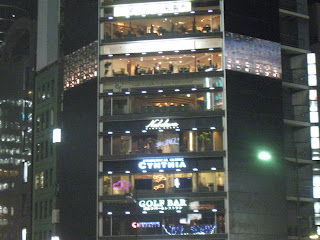
Ginza - Tokyo
Ginza - Tokyo

We spent the second night at Ginza Capital Main Hotel (don't confuse with the Ginza Capita Annex, which is the same hotel but different building. Still, they're very close). Good stuff in room: included water heater and tea bags, high definition TV (movie rentals and free Japanese TV channels), free wired broadband Internet available, shower nice and warm but not great, friendly and VERY helpful hotel staff, excellent location and very good price, safe and secure, free shuttle to Tokyo station (read day 3).

Ginza Hotel Capital Main - Tokyo


Not so good: bed mattress was not good (too hard and one can feel the springs), neighbors could be heard however we're in Japan and people are pretty quiet, the heating system was more noisy that I'd like, very small bathroom. This room is smaller than the one from Hotel Jal City Tokyo Haneda (read day 1).
I would give 2 stars to this hotel. It's OK for a short number of days, and it is very close to the Fish Market. If you prepay this hotel, make sure to take a print of the voucher. They are going to ask for it at check out. I didn't have it because I didn't receive it. But after a short discussion, they took my printed copy of the purchase receipt.

Tips & Tricks

  • If you want to make/change an existing reservation for a JR Train, try to avoid making the long line to the cashier. Just go to any open desk and talk to the JR representative. It worked for us, she took care immediately and didn't make us make the line. We saved at least 30 minutes. This is probably a benefit that foreign tourists get :-)
  • Don't spend too much time trying to find a cheaper JR Pass. After a few hours of trying, I couldn't find anything better than the official JRPass.com.
  • Eating out cost: An average price for restaurants seems to be Y800 - Y1200 (u$10.4 - u$15.6). In general, food is about 40% more expensive than in the US. So far, the lowest cost option is to get a cold sandwich at a convenience store for Y280 ($3.6), or the noddle bowl I mentioned above.
  • Get a very good map of Tokyo. Lots of street names are in Japanese only. The buildings don't have a number on front. It can get pretty confusing for somebody new to Japan. The best source of directions are police and people walking by. Actually, if you can't find the place in a short time, just ask anybody walking by. In my experience, Japanese are very helpful and patient when asked for directions. But still, take with you a street level map to let them mark on it the way to your destination.
  • On every other street block, I see a map of the area showing where I'm standing. But some of the maps are in Japanese only.
  • The GPS of my phone didn't work; it couldn't find the satellites. Don't rely on it.
  • My US cell phone works in Tokyo. It automatically connects to NTT-Docomo Telecom (roaming, expensive). I could eventually make cell calls, and access wireless broadband internet (3G). An option is to rent a cell phone in Japan, this should be easy although I didn't try. Some companies will even ship a rental phone to a US address.
  • In some hotels laptops are available for rent at Y1000 per day (~ u$13)

Monday, December 26, 2011

Japan: Day 1 - Arriving to Tokyo (December 26th, 2011)

Today I arrived to Tokyo... first time in this part of the world.
About 3 weeks back, I realized that I had some left over vacations that needed to be used by end of year...all right! The only problem was that it was too late to find a good priced ticket to anywhere in the world. Everything was at least double the cost due to the holidays... except Tokyo Haneda airport. American Airlines posted an offer of reduced mileage trip (50% discount ! ). This was a no brainer, I just bought it and spent the next two weeks reading about Japan and looking for lodging options.
Exchange rate: 1 US Dollar = 77 Japanese Yen

Day 1:

We arrived to Tokyo Haneda Airport at 10:30pm. Luckily for us, the flight was smooth and without delay. In Japan, most of the public transportation stops at midnight. There are still some buses, and of course taxis . Cabs are very expensive. Buses charge more, but frequency and destinations are much less than on daytime.
It was too risky to book a cheaper but far away hotel, therefore I decided to stay close to the airport. The closest hotel is inside the airport, but pretty costly. About 2 miles outside the airport, there is one inn which has a pretty decent cost, but it was full; and the Hotel Jal City Haneda Tokyo which was more expensive than I wanted, but I knew I would reach at any time ( a cab shouldn't be that expensive in worst case).... this hotel has a free shuttle service that ends shortly before 12am (midnight). Since we didn't check bags in, just went directly to customs. The line was short, less than 10 minute wait. The customs personnel were very polite and friendly (Japanese are very welcoming and friendly to visitors). So, after a short while, we were out of customs asking a policeman where the free shuttle stop was located. The guy was helpful , but didn't have any idea and he called a lady for additional help. Basically, we had to walk straight across custom's EXIT, following the Group Bus sign. The international arrival gate is on the 2nd floor; the Group Bus stop on the 1st floor (take elevator or walk stairs down). Be careful, there is another bus stop called route bus and it is for regular line buses. The free shuttle is called Group Bus and this is a stop across the street.
On the first floor, there's a parking place that would fit about 8 buses side by side, a waiting room, and restrooms. We sat at the waiting room with a couple Japanese people. The room is heated , has comfortable seats, and a vending machine for drinks. The restrooms are clean, they even have electric bidet.
Japan in general, and Tokyo in particular, is probably one of the safest and cleanest places in the world. This is what I've read, what everybody who I knew that came to Japan told me, and what I'm confirming. Attention has to be paid of course, Tokyo is a 30+ million people place. But it is quite safe day and night.
Although it is winter now, the temperature isn't that low. Probably about 9 Celsius at 11pm. We carry a pullover and a winter jacket.
The group bus to the hotel was easy to identify because the hotel name was written on its side.
After a 10 minute trip, we arrived to the hotel.
Hotel Jal City Haneda is a very good option for staying the fist night (about u$150/day). Check in was fast (I had prepaid the hotel through Hotels.com). The room is small (as probably most of the things in Japan), but comfortable , safe, and clean. It has a queen bed, fridge, high definition Sony TV (all channels are in Japanese) , a desk, free wired high speed internet access no configuration needed (they provide a cable, you can find it under the desk), restroom with bidet, bath accessories (shampoo, soap, tooth brush, and other stuff for women hair), slippers, a couple of robes, and more. I would rate this hotel as a 3 star. The bed is firm and the room very quiet, allowing for an excellent night of sleep.

Vending machines everywhere in Tokyo and Kyoto

Tips & Tricks:

  • If flying with Japan Airlines, try to reserve sit on the exit row (45 was it for us). There's plenty of leg room and the seats recline (not too much, but enough for sleeping). There's no row of seats on the exit window.
  • I'm not endorsing any airline in particular here, but fyi, Japan Airlines offers free alcoholic drinks in Economy class. Also, the food served was pretty good (Chicken Teriyaki, Fish, Pasta).
  • Japan Airlines planes have a camera on the bottom, and the video is displayed in the screen inside the plan. It allows to watch the take off/landing as the pilot sees it. Very interesting.
  • If you arrive late to Haneda, remember that the public transportation is very scarce after 12am. Unless you are familiar with Japan/Tokyo, don't attempt to travel far away with public transportation or you could get stuck in the middle if you're late.
  • An option to save money is to just to stay and sleep on an airport bench. Many travelers do that, and take the train when it starts running at 5am.
  • Before traveling, print the way to the bus/public transportation you want to take in order to save time as it gets confusing with all signs in Japanese.
  • Book the hotel before coming. Pre-pay it, then you don't have to worry about this. I didn't even get asked for a credit card.
  • In order to plan this trip, I got several travel guides and DVD from the public library. They are a great and free source of information.
  • In Japan, you can always ask the police for help with directions. They are ready to help, but might not be very fluent with English.
  • Travel lightly if moving through different places. Subways can get packed at certain times of day, without room for large bags.
Helpful guides used along my trip:
  • Fodor's Japan ( ISBN 978-0-307-48049-1 ) : This book has travel information from everywhere in Japan.
  • Top 10 Tokyo Eyewitness Travel (ISBN 978-0-7566-5367-5): This small pocket book is great for Tokyo. It includes the most important places to visit, events, and things to do. Maps from Tokyo, rail, subway are included. It's fine, but more details are needed when walking the areas.